Bosnia and Herzegovina — Europe’s Hidden Tax Champion
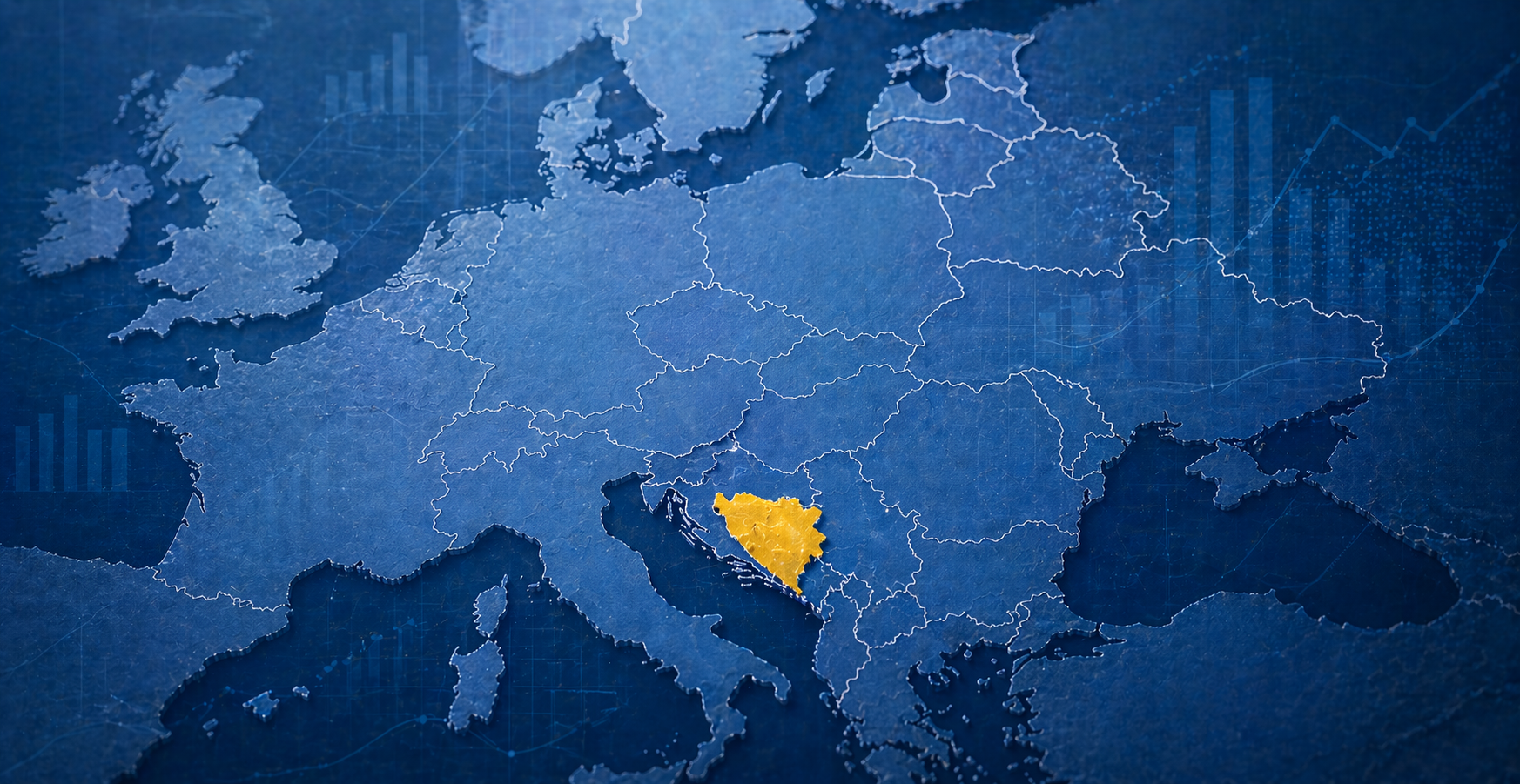
Bosnia and Herzegovina remains one of the most fiscally competitive, yet underutilized, economies in Europe.
The country applies a flat corporate income tax rate of 10%, placing it among the lowest in Europe. This is combined with a standard VAT rate of 17%, which is below the EU average of approximately 21–22%.
Labor cost competitiveness reinforces this position. Average net monthly wages range between €700–900, significantly below EU levels, while maintaining a technically skilled workforce in sectors such as manufacturing, engineering, and IT.
On a macro level, Bosnia and Herzegovina’s GDP stands at approximately €28–30 billion, with GDP per capita around €8,500–9,500 (nominal). Economic growth has remained stable in the 2–3% range, despite structural constraints.
Export performance is closely tied to the European Union, which accounts for over 70% of total exports, primarily in metals, automotive components, wood processing, and electricity.
However, investment inflows remain modest, typically ranging between €800 million and €1.5 billion annually, reflecting structural challenges rather than a lack of economic fundamentals.
Administrative fragmentation, slower regulatory processes, and institutional complexity continue to influence investor perception and execution speed.
This creates a distinct imbalance:
Bosnia and Herzegovina offers top-tier fiscal efficiency, but operates below its potential due to structural and visibility constraints.
For cost-sensitive industries and companies seeking proximity to EU markets, the country represents one of the more financially efficient operating environments in Europe—provided that complexity is managed effectively.