European Economies Are Turning to Each Other
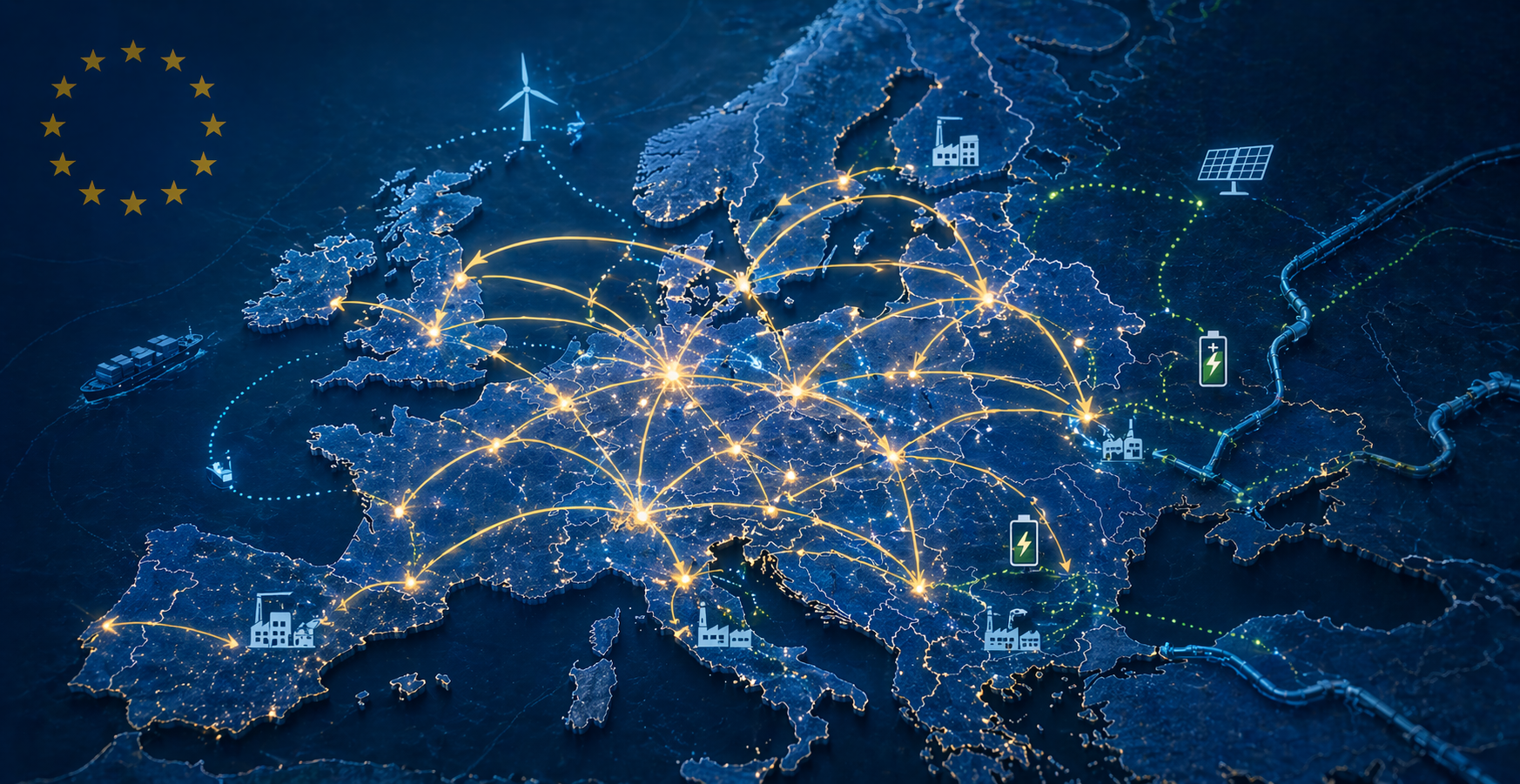
The restructuring of global economic relations is increasingly visible in European trade and investment patterns.
In 2024, approximately 63–65% of total EU trade occurred within the European Union itself, highlighting the depth of internal integration. Intra-EU goods trade exceeded €4 trillion annually, making it one of the largest integrated economic zones globally.
This shift has intensified following disruptions triggered by the COVID-19 pandemic and subsequent geopolitical tensions. Supply chain resilience is now a measurable economic priority.
Nearshoring trends are reflected in investment flows. Central and Eastern European countries—particularly Poland, Romania, and Hungary—have recorded double-digit growth in industrial FDI projects in sectors such as automotive, electronics, and battery production.
The policy framework is evolving accordingly. The European Union has mobilized hundreds of billions of euros through instruments such as the Recovery and Resilience Facility (€723 billion) and targeted industrial policies supporting semiconductors, energy, and green transition sectors.
Energy trade patterns have also shifted. Since 2022, dependence on Russian gas has dropped from over 40% of EU imports to below 15%, accelerating intra-European energy cooperation and diversification.
The result is not deglobalization, but regional consolidation.
European economies are increasingly structured around shorter, more controllable supply chains, where proximity and reliability carry quantifiable economic value alongside cost efficiency.